2. Page 2 Deputy Commissioner of ACC Augustine Foday Ngobie The Prevention Department of the Anti - Corruption Commission (ACC) and the United Nations Office on Drugs and Crime (UNODC), in partnership with the Ministry of Sports, commenced a three - day workshop on corruption risk management at the New Brookfields Hotel on Jomo Kenyatta Road, Freetown. The workshop which began on 2 December 2025 had as its objective to identify key corruption risks impact on the Ministry ’ s ability to achieve its mandate to develop and implement policies and programs that promote sports and national unity in Sierra Leone. Speaking at the workshop, ACC Deputy Commissioner, Augustine Foday Ngobie said , “ A three - day corruption risk assessment marks the beginning of the process. The workshop aims at identifying and prioritizing corruption risks within the Ministry of Sports with a particular focus on the Human Resources, Finance and Procurement units. Participants should engage in interactive sessions, presentations and group exercises intended to identify risks and formulate practical mitigation strategies. ” Emphasizing the overarching objective, the Deputy Chief said that the workshop would strengthen governance by identifying key vulnerabilities that might affect the Ministry ’ s ability to fulfill its mandate. The exercise included risks classification, likelihood assessment and impact as well as developing effective measures to prevent potential corruption. In his statement the UNODC representative, Kodjo Attisso, emphasized that according to the methodology outlined in the ‘ UNODC ’ s state of integrity: A guide on conducting corruption risk assessment in public organizations ’, the process involved five key stages: establishing context, risk identification, risk analysis, risk evaluation and risk treatment. Mr. Attisso stressed that the approach was designed to help the Ministry systematically uncover and address corruption - prone areas. The initiative was part of the UNODC ’ s broader effort to help public - sector institutions identify weaknesses and develop targeted actions to mitigate corruption risks. Presentative from the UNODC, Kodjo Attisso Group photo of representatives from the ACC, UNODC and Ministry of Sports By Martina George, ACC Public Education Officer
4. Page 4 Anti - Corruption Commission (ACC) monitored the delivery and packing of a consignment of cartons of Plumpy ’ Nuts on the invitation of the District Health Management Team (DHMT) in Port Loko District on 25 November 2025. The monitoring team was led by the ACC Director in the North West region, Zainab Othman. In her keynote statement, Director Othman said the Commission's presence was to ensure the exercise was done without any irregularities. She said, in addition, that the presence of the Commission increased public confidence, and urged the DHMT to uphold integrity and transparency in delivering service to the public at all times. The therapeutic food items, according to the Management Team, would be followed by the next delivery of Free Health Care (FHC) drugs on a later date in December 2025 Monitoring the delivery and storage of essential drugs and medical commodities falls within the remit of the Commission to ensure that the Free Health Care program succeeds in meeting the needs of vulnerable citizens particularly in rural communities. In another development on Thursday, 27th November 2025, the ACC team visited Saint Joseph Secondary and Ahmadiyya Muslim Secondary Schools in Lungi, Kaffu Bullom Chiefdom. The purpose of the visit was to conduct engagements with the staffs and pupils of the schools on the dangers of corruption and the need to foster best practices within the administration of the institutions. Director Othman expressed trust in the schools and urged them to perform their duties fair and square in consonance with the ethics of their profession. She announced that the Commission is determined, as it has always been, to see a transformation in the edu- cation sector in order to promote building the human capacity in the country . She warned the principals of the schools to resist all forms of corruption includ- ing academic malpractices, and encouraged the teachers to commit to supporting the pupils to realise their academic goals. ACC Principal Investigator (P.I.), Bernard Dixon and Senior Investigations Officer (SIO) Sheikh Sahid Sowa took turns in explaining corruption offences related to the education sector as enshrined in the Anti - Corruption Act of 2008 (as amended in 2019). Chaired by the Senior Public Education Officer Junisa Sankoh, the meetings with the schools ended with question - and - answer sessions and announcements of free ACC hotlines to report corruption: 8515, 077985985, 077986986. Mr. Sankoh encouraged anonymous reporting without malice, and assured that reports made to the Commission are always treated with high confidentiality while guaranteeing witness protection. Also, the ACC team paid a courtesy call on Kaffu Bullom Paramount Chief, Bai Shegbora Shehgba Gbera III in an attempt to maintain a stronger partnership between traditional stakeholders in Port Loko District and the Commission, as the campaign against corruption requires concerted efforts at all levels of society to bolster quality public service delivery. Receiving the team the PC affirmed his unflinching support to the fight against corruption in Sierra Leone. He averred that his Kaffu Bullom subjects were more than resolved to resist and report corruption at all times. ACC Director in the North West region Zainab Othman (in blue) The Director and her team visited the Saint Joseph Secondary in Lungi
3. Page 3 Deputy Commissioner, ACC, Augustine Fo- day Ngobie delivering the keynote address The Deputy Commissioner of the Anti - Corruption Commission (ACC), Augustine Foday Ngobie, has told education stakeholders that the Commission would continue to pay keen attention to corruption and accountability issues within the education sector. He made the statement while delivering the keynote address at the National Education Stakeholders Reflection Conference held on Thursday, 4th December 2025, at the Freetown City Hall. The conference was held under the theme: ‘ Deepening Reflection on Education Sector Outcomes and Challenges in Sierra Leone to Inform Stakeholders ’ Actions ’ . Organized by the Network Movement for Youth and Children ’ s Welfare in collaboration with the Youth Alliance for Sustainable Development and supported by ActionAid/Iris Aid, the conference provided an inclusive platform for stakeholders to critically assess current education outcomes in Sierra Leone, identify systemic challenges, and develop practical recommendations to inform policy reforms and promote collaborative actions aimed at improving learning and accountability in the education sector. He noted that education is central to the government ’ s flagship Human Capital Development initiative, which consistently accounts for over 20 percent of the national budget. Given its pivotal role in shaping the nation's future, he said, safeguarding the sector from corruption remains a national priority . “ We will not stop, we will not be deterred, and we will not be discouraged, as education is the engine for sustainable national development, ” Mr Ngobie assured the audience. Highlighting the progress made, Mr. Ngobie referenced the introduction of a comprehensive corruption offence – Academic Malpractice (Section 128(3) – under the 2019 amendment of the Anti - Corruption Act of 2008. This provision criminalizes all forms of corrupt practices within the education sector. As a result, he disclosed about 20 individuals across Sierra Leone who have been charged to court for various education - related corruption offences, with several convictions secured. He further noted the efforts of the Public Education and Outreach Department through the ‘ Meet the School and University ’ campaign, which delivers anti - corruption messages to educational institutions nationwide. The campaign, he noted, aims to “ catch them young ” by instilling integrity values in pupils and students. Mr. Ngobie also called for increased prioritization of education funding, enhanced teacher training, greater community engagement, and leveraging technology and partnerships to improve access and quality across the sector. Speaking at the event, the Executive Director of ActionAid Sierra Leone, Foday Swarray, said that discussions at such conferences must translate into bold and practical actions that address the realities of the education system. He highlighted the need to restore trust and integrity at all levels of the sector. Mr. Swarray reaffirmed Action Aid ’ s commitment to working with government, civil society, education coalitions, and partners to build a just, equitable, and transformative education system. The Deputy Commissioner and a cross section of participants
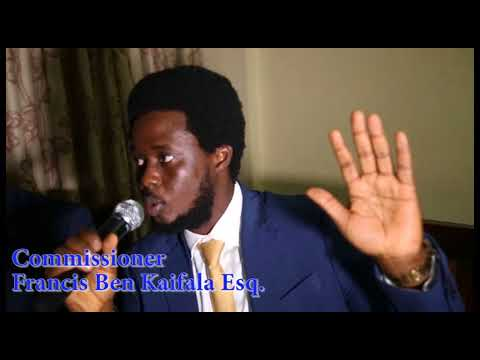
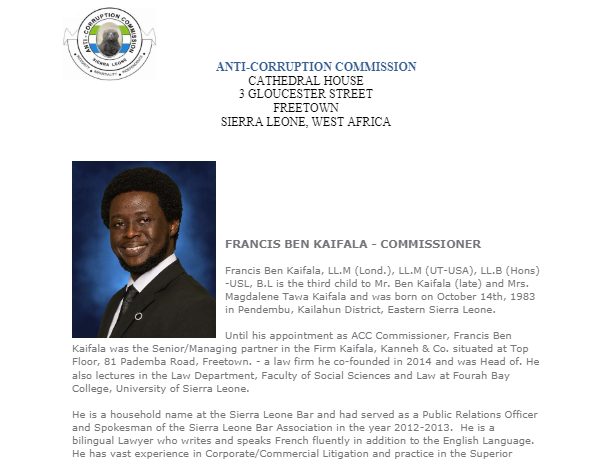
1. 11 Mobile No: 8515 on all Networks EDITORIAL TEAM EDITOR - IN - CHIEF Aiah P. M. Sourie EDITORS Sylvanus Blake Alex A. Bah LAYOUT & GRAPHICS Philippa M Davies EDITORIAL ADVISERS Augustine Foday Ngobie Patrick Sandi Abubakarr Turay 1 — 5 December 2025 ISSUE 3, VOLUME 23 The Commissioner of Sierra Leone ’ s Anti - Corruption Commission (ACC), Francis Ben Kaifala Esq, has called for improved corruption measurement tool at the second Global Conference aimed at harnessing data to strengthen transparency, accountability, and policymaking to robustly confront corruption on a global scale. The conference was held at the United Nations Headquarters, New York from 2 to 4 December 2025 to share experience and examine the possibilities of using reliable data for policy- making in the fight against corruption. Commissioner Kaifala prefaced his speech with warm greetings from HE President Julius Maada Bio and the people of Sierra Leone who have shown readiness to support efforts to reshape actionable methods and tools to measure corruption. He remarked that Transparency International (TI) ’ s annual Corruption Perception Index (CPI) has become a controversial issue especially in developing countries that often do poorly on the index. Citing instances, the Commissioner explained that when he served as Board Member of the African Union Advisory Board on Corruption (AUABC) and president of the Network of Anti - Corruption Institutions in West Africa (NACIWA), TI CPI would always stir opposing views on its legitimacy and authenticity. “ It seemed that very time the CPI came up in our meetings, the typical reaction ranged from disapproval to outrage ... More broadly, many African government officials and some anti - corruption campaigners see the CPI as well as the TI ’ s accompanying commentaries as part of a purpose - driven smear campaign, ” he said. The ACC Chief argued that the basic sources in the index formula are not always transparent enough relative to the experts who do the scoring. He added that the CPI fails to cover some important areas such as ‘ tax fraud, money laundry, illicit financial flows ’ etc. which anti - graft campaigners concentration. Mr Kaifala expressed concern that the CPI is sometimes used by TI and similar institutions to portray an “ inaccurate and sometimes unfair picture of how well anti - corruption fighters are doing their job, particularly in Africa. ” This justifies the need for the conference, he stressed, as existing yardsticks to measure corruption have become disturbing for ACAs and governments. The Commissioner highlighted that data sourced from desk reviews and sometimes unknown experts for indexes like the CPI “ give our countries low scores and discount the efforts we are putting into controlling corruption. ” He called for better measurement tool that would support peer - reviewing, so that developing countries can learn from other countries that are faring well on the CPI. “ We can review country - specific information and data in the yearly releases to identify areas of accountability and transparency that need improvement. And engage with integrity to ensure the measurements better match what is actually happening on the ground, ” the Commissioner recommended . The People ’ s Commissioner underscored the need for a new approach as existing corruption management tools are prone to errors or maybe bias, while not discounting the reality of corruption. He called for collective efforts to build an acceptable formula rooted in methodology that “ captures prevalence levels and does not discount effort but strongly incorporate it. ” The Conference was co - convened by UNDP, the International Anti - Corruption Academy (IACA), the United Nations Office on Drugs and Crime (UNODC), the World Bank and the Organisation for Economic Cooperation and Development (OECD). It attracted policymakers, experts from governments, civil society, and international organisations. ACC Commissioner Francis Ben Kaifala Esq. at the conference at the UN BY Aiah P. M. Sourie, Head of Outreach, ACC